 EN
EN
 CZ
CZ SK
SK PL
PL HU
HU RO
RO

Leaf Blowers and Leaf Vacuums: A Comprehensive Guide and Practical Tips
19. 12. 2025

There are many tools on the market designed for cleaning up fallen leaves. Choosing the right device depends on the size of the area, the type of garden, and how you want to handle the leaves afterwards. Below is an overview of the technologies, their advantages, and practical tips for efficient work.
Types of Equipment
- Electric blowers/vacuums – mains-powered, usually lighter, quiet, and suitable for small to medium-sized gardens. They are limited by cable length but have low operating costs and zero emissions.
- Cordless (battery-powered) – combine mobility with quiet operation. Operating time depends on battery capacity; for larger areas, consider more powerful sets or a spare battery.
- Petrol-powered (gas) – very powerful, suitable for larger areas and places without access to the electrical grid. They have higher weight, vibration, and operating costs, but provide the power needed for wet or dense layers of leaves.
- Professional suction units – large vacuums designed for parks, residential developments, or large public and private areas. They offer high collection bag or container capacity and often a better shredding system.
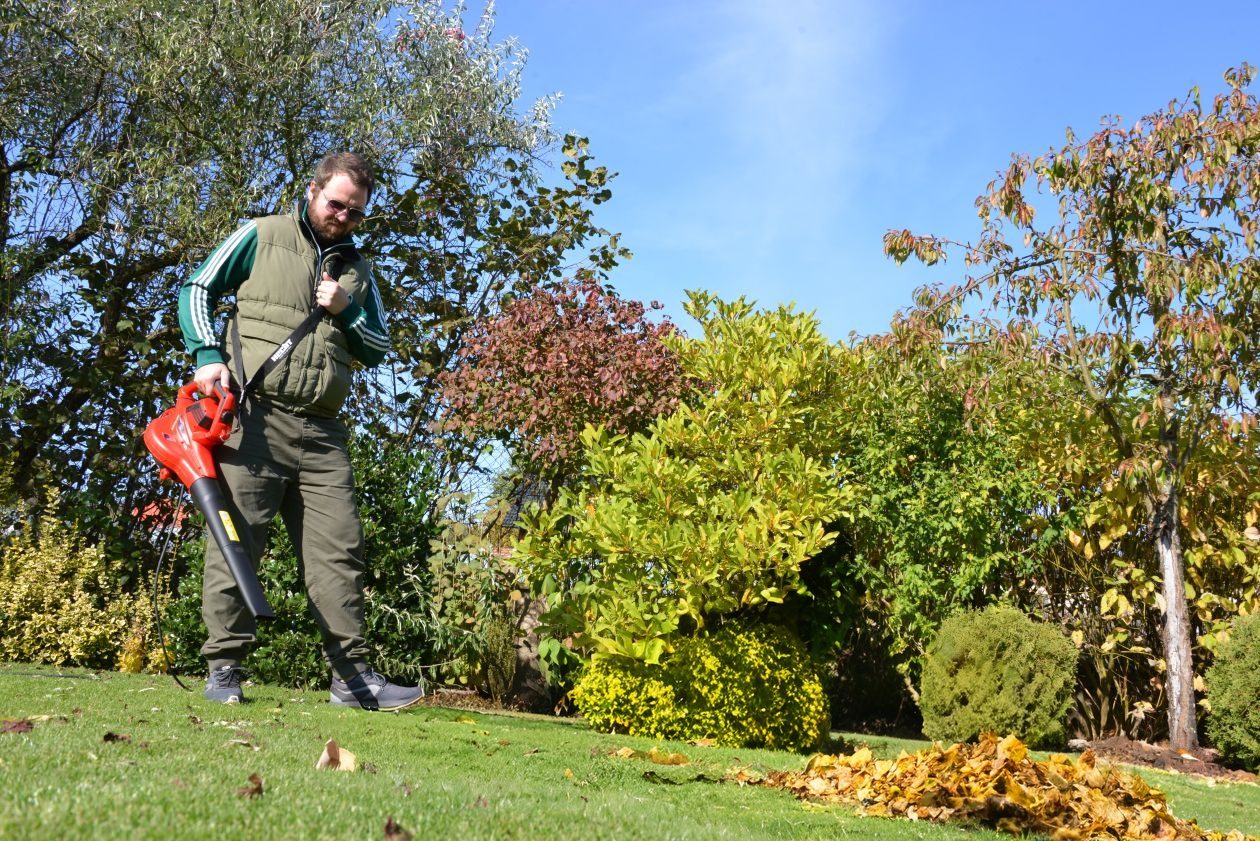
Blower vs. Vacuum — when to use which
A Blower is ideal for quickly gathering leaves into a pile, cleaning sidewalks, driveways, or blowing leaves onto a tarp. It allows for fast work over wide areas.
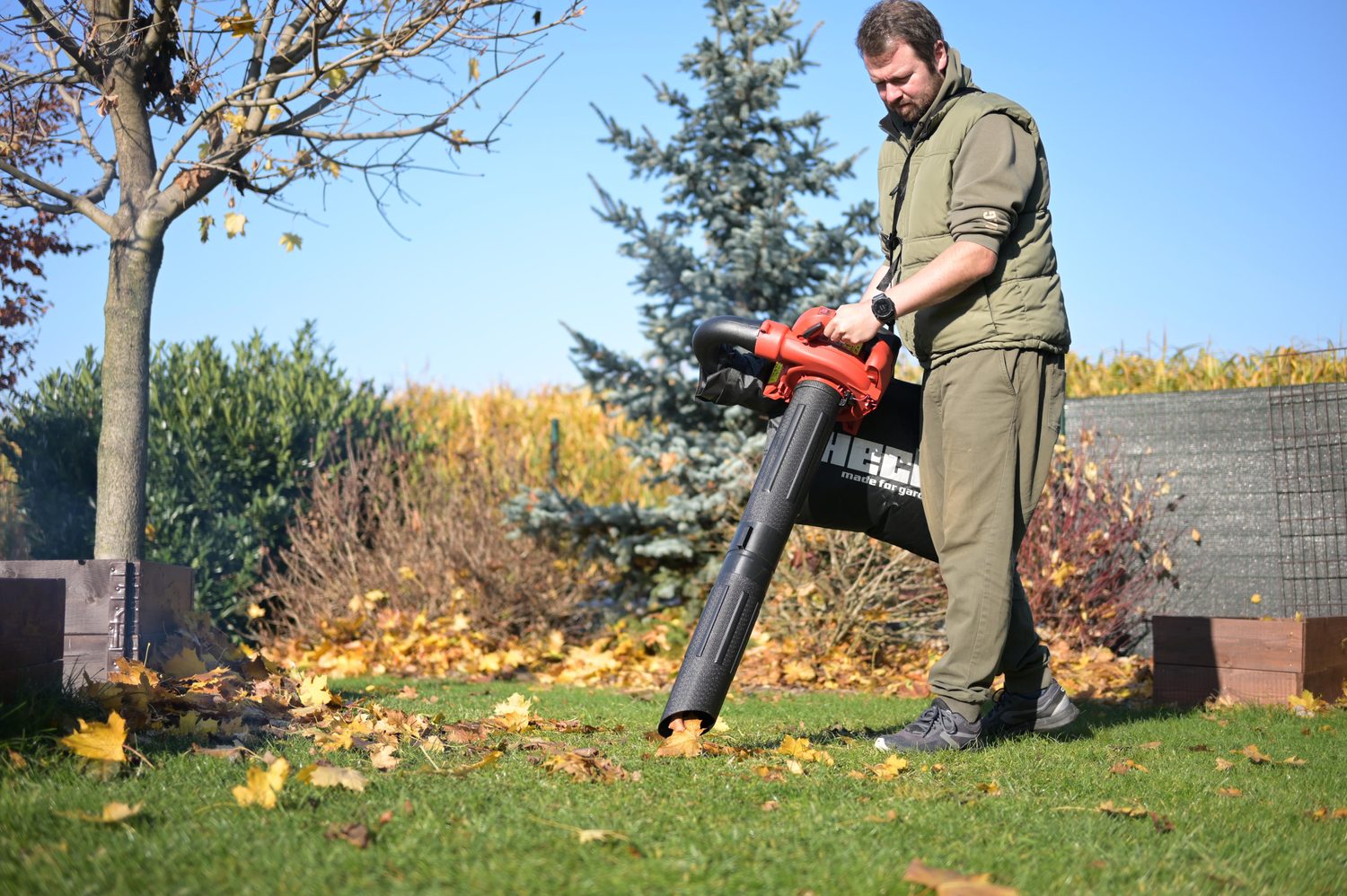
A Leaf Vacuum is suitable if you want to remove the leaves immediately or if you prefer less dust and more control. Vacuums often include a shredding mechanism: the leaves are shredded during suction, allowing more to fit into the collection bag. Furthermore, shredded leaves compost better.
Some models are combined — they can be easily switched from blower mode to vacuum mode (on electric models, flipping a lever often suffices; on others, you swap the nozzle). This increases versatility and saves both space and money.
What Affects Efficiency — wet vs. dry leaves
After rain, leaves are wet and heavy: they are harder to blow and vacuum. Wet leaves tend to stick together, falling to the ground in damp "clumps," and they clog suction hoses or shredding mechanisms much more frequently. If possible, let the area dry for a while.
Practical Tips for Faster Work
- Blow leaves onto a tarp: the work goes faster because leaves on a tarp are easy to move; you don't have to laboriously load them into a wheelbarrow or cart. Secure the tarp with stakes or weights — otherwise, the blower might blow it away.
- Work in sections: divide the garden into zones and work through them one by one. You will save time and reduce repetitive handling.
- Utilize the shredding function: if you have a vacuum with a shredder, use it — it facilitates composting and reduces the volume of waste in the collection bag.
- Regular collection: continuous leaf collection prevents the accumulation of large wet layers that would be difficult to remove all at once.
Processing Collected Leaves
Healthy leaves are a valuable raw material for compost — shredded leaves compost faster and more evenly. If you have the chance, add leaves to the compost or work them into the soil as mulch or a structure improver.
Infested or diseased leaves are better off not being composted at home; take them to a professional composting facility or a bio-waste collection point where composting occurs in a safe manner (sufficiently high temperatures kill pathogens).
BURNING leaves is strongly discouraged — it harms the air and is prohibited in the Czech Republic, carrying the risk of high fines. Additionally, burning destroys nutrients that could otherwise be reused in the garden.
Safety and Maintenance
- Always use protective equipment — safety glasses, ear protection (especially with petrol machines), and gloves.
- Ensure there are no stones or other objects in the leaves that could damage the machine or be projected.
- Regularly clean the suction and collection bags.
- For petrol machines, ensure the correct oil/fuel mixing ratio and regular service maintenance.
- Clean and dry the device before storage; for cordless machines, store batteries in a dry, cool place.
The right choice between a blower and a vacuum depends on your specific needs. For smaller properties and regular cleaning, electric or cordless models are suitable; for extensive areas or more demanding conditions, consider petrol or professional machines. Combined machines that allow switching between blowing and collection with shredding represent a universal solution. By following these tips, you will speed up your work, save time, and simultaneously help effectively recycle bio-material in your garden.
Did you find the article interesting?
Share it further.
You might also be interested in

The End of Flat Tires: Why Airless Wheels Are the Future of Snow Blowers
When half a meter of snow falls, the last thing you want to deal with is a flat tire on your snow blower. Classic…