 EN
EN
 CZ
CZ SK
SK PL
PL HU
HU RO
RO

Why buy a small power generator?
06. 01. 2026

An electric generator (power generator) is a practical device providing electrical energy independently of the public grid. It is suitable as a backup power source during power outages (calamities, storms, grid failures), for camping, or on construction sites. At home, it can ensure the operation of essential appliances — lights, phone charging, powering radios, circulation pumps for boilers, or selected household appliances (refrigerator for a short time, selected outlets).
What you can power with a generator — usage examples
- Emergency lighting and communication: lamps, charging phones and power banks, radio for receiving information.
- Heating and circulation: powering boiler circulation pumps to prevent the heating system from freezing.
- Comfort needs: partial powering of a refrigerator, electric kettle, or microwave — but it always depends on the power and type of appliance.
- Leisure use: powering appliances on vacation, camping, small workshops, or garden work.
How to choose the power output
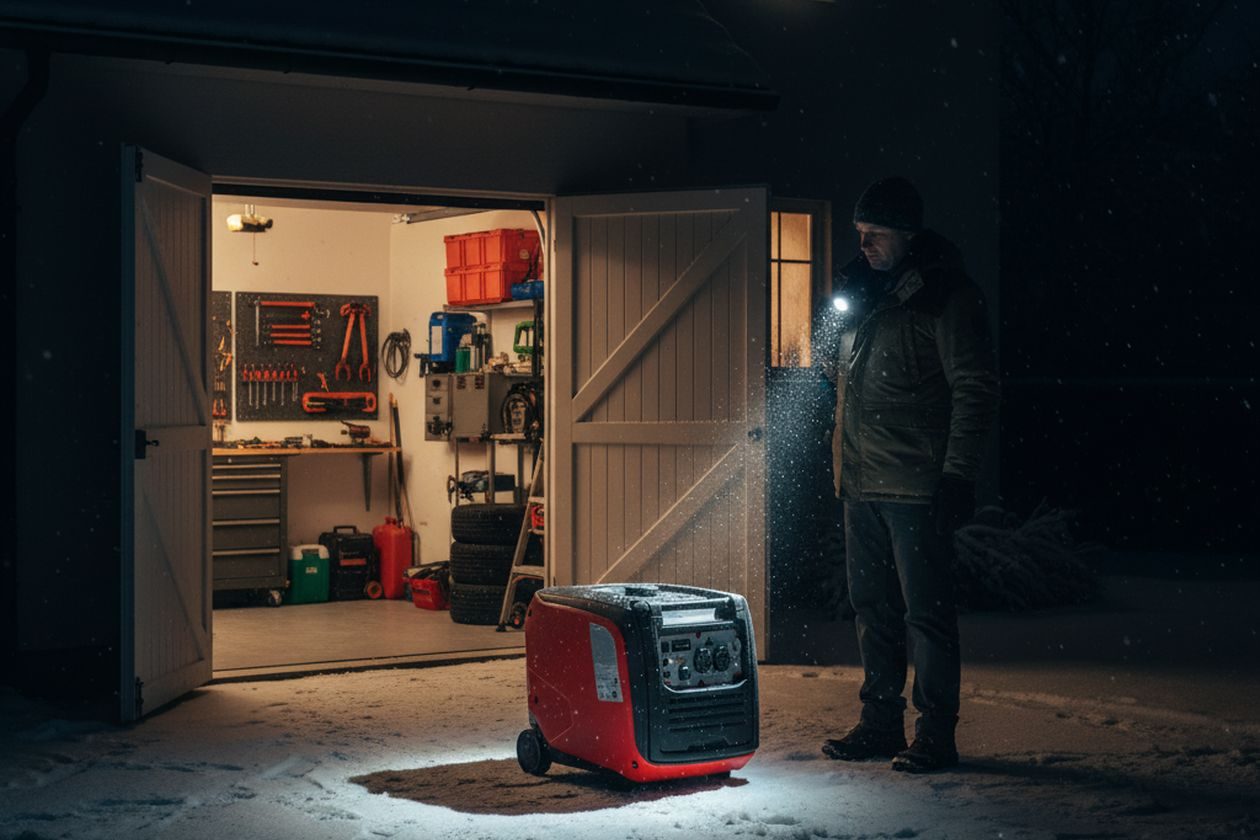
Before purchasing, calculate the total power of the appliances you want to run simultaneously. For appliances with an electric motor (refrigerator, pump, drill), also account for the so-called starting current — it can be 2–6× higher than the rated operating consumption. Therefore, it is important to choose a generator with a power reserve (recommended 20–30% above the sum of requirements).
AVR regulation vs. inverter generator
- AVR (Automatic Voltage Regulator):
AVR stabilizes the output voltage mechanically/electronically and is common in classic generators. It provides decent but less precise voltage than inverters. It is suitable for powering light bulbs, tools, and appliances that are not sensitive to small fluctuations (drills, grinders, heating elements).
- Inverter generator:
An inverter first generates DC voltage and then inverts it into a very clean AC signal with precise voltage and frequency. The result is low harmonic content and a stable sine wave — suitable for sensitive electronics (laptops, mobile chargers, audio/video equipment) or for powering converters. Inverters are often lighter, more efficient at partial load, and quieter, but usually more expensive for the same power output.
Single-phase vs. three-phase generator
- Single-phase (230 V):
Used in households and for most appliances. Ideal for lighting, outlets, smaller pumps, kitchen appliances, and tools.
- Three-phase (3×400 V):
You need it if you have three-phase equipment (large electric motors, some boilers, workshop machines, large pumps). A three-phase generator can deliver more power more compactly. For home use, it is often unnecessary — if you use it, you must correctly distribute the load between phases and have a suitable switch/distributor.
Note: A three-phase busbar in the house and a three-phase generator require correct wiring (distribution between phases) and professional installation of the source switch to avoid damage to appliances or backfeed into the grid.
Fuels and the ethanol problem
Modern gasoline often contains ethanol admixtures (E10 etc.). Ethanol in fuel has several disadvantages for backup use:
- Hygroscopicity: Ethanol binds water from the surrounding air, leading to fuel separation and corrosion of the fuel system.
- Degradation during storage: Fuel with ethanol decomposes faster during long-term storage and creates deposits that clog the carburetor, injection system, or fuel filters.
- Damage to fuel systems: Ethanol can attack some types of seals and plastic parts of older generators.
What to do:
- Use a fuel stabilizer if you leave fuel in the tank for a longer time — usually add before storage and occasionally start the generator and let it run for a few minutes so the stabilizer passes through the system.
- Purchase premium ethanol-free fuel (if available) for long-term storage or for a backup source.
- During long-term non-use, drain the fuel from the carburetor and fuel system, or flush the generator with fresh fuel containing a stabilizer.
Safety and operation
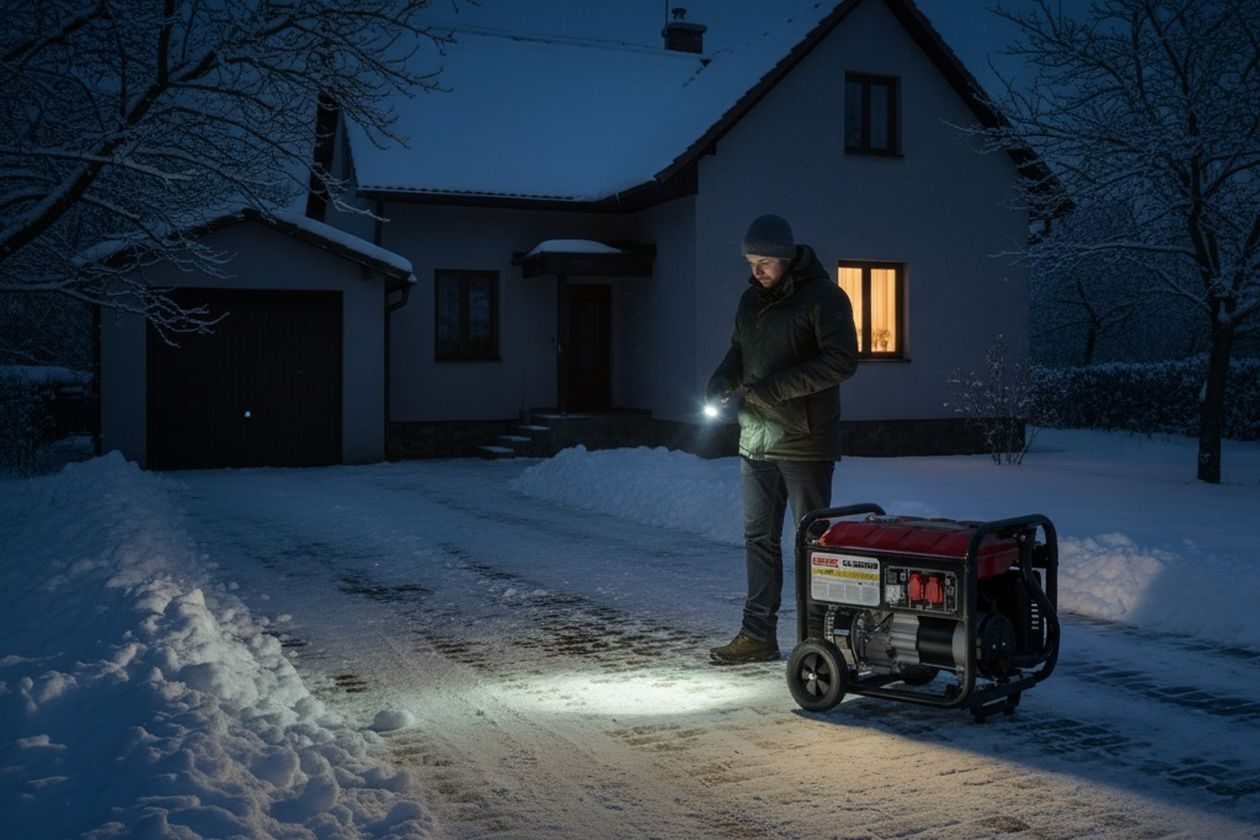
- Ventilation and exhaust: The generator must always run outdoors in an open area and sufficiently far from windows and doors; the exhaust contains poisonous carbon monoxide (CO).
- Earthing: According to type and local regulations — follow the manufacturer's manual and electrical installation standards.
- Automatic or manual switch: For safe connection to the home distribution, an ATS (automatic transfer switch) or manual switch is necessary; never connect the generator directly to outlets without a proper switch (risk of backfeeding into the grid, danger to grid workers). Such wiring must always be done only by a professional.
- Fire safety: Store fuel in safe containers away from heat sources; stop the engine and let it cool down when refueling.
- Noise: Generators can be noisy — check the noise level (dB) and consider the location or soundproofing cladding (or an inverter model for lower noise).
Maintenance
- Regularly change the oil, air, and fuel filter according to the manual.
- If the generator stands for a long time, run it at least once a month for a few minutes under load (with an appliance connected) so that the oil, fuel, and additives circulate and the device is lubricated.
- During seasonal storage, empty the fuel tank or use a stabilizer.
Practical tips for purchase and operation
- Choose the power output with a reserve and consider the starting currents of appliances (motors).
- For sensitive electronics, choose an inverter; for coarser tools, an AVR generator with sufficient power is enough.
- For home backup, a single-phase generator is sufficient; for operating three-phase machines or for distribution to the entire object, choose a three-phase model with a corresponding switch and distribution.
- For stored fuel, use a stabilizer or ethanol-free fuel.
- Follow safety rules: operate outdoors, sufficient distance from windows, correct earthing, and connection of distribution by a professional.
An electric generator is a very useful device in crisis situations and for leisure use. Correct selection of the type (inverter vs. AVR, single-phase vs. three-phase), good knowledge of the planned load, careful maintenance, and solving the fuel problem (ethanol) will significantly extend the life of the generator and ensure reliable operation. Safety is key — never run the generator in enclosed spaces and when connecting to the home distribution, use approved switches and leave interventions to an electrician.
Did you find the article interesting?
Share it further.
You might also be interested in

One Battery for Everything: Save Thousands with a Battery System
The era of cables is slowly coming to an end. Freedom of movement without hunting for extension cords is addictive, but…