 EN
EN
 CZ
CZ SK
SK PL
PL HU
HU RO
RO


Coarse sea salt designed primarily for pools equipped with a salt chlorinator. White crystals 1–2 mm. Odourless and free of impurities. Highly pure salt >97% NaCl. Low moisture content <0.30%.
Coarse sea salt designed primarily for pools equipped with a salt chlorinator (salt electrolysis system).
| ✓ Highly pure salt >97% NaCl ✓ White crystals 1–2 mm |
✓ Low moisture content <0.30% ✓ Store in a dry place |
| ✓ Odourless and free of impurities | ✓ Shelf life 2 years |
Who is it for?
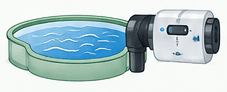
- Pool owners with salt water treatment (salt chlorinator)
- Customers who:
- don't want to regularly dose chlorine tablets
- want more pleasant water
- are looking for lower running costs
- already own a salt chlorinator and need to top up salt
Who is it not for?
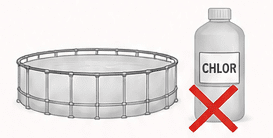
If the pool does not have a salt chlorinator, the salt alone is not intended as a replacement for pool chemicals.
By adding salt to a regular pool:
- no disinfection is produced
- the water will not be hygienically protected
- corrosion of metal parts may occur
How does it work?
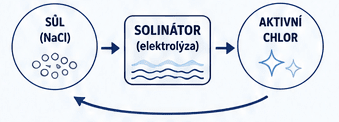
The salt chlorinator uses electrolysis to convert dissolved salt into active chlorine, which:
- destroys bacteria
- eliminates algae
- disinfects the water
After disinfection, the chlorine converts back into salt, so it is hardly consumed at all.
How much salt is needed?
Always according to the salt chlorinator manufacturer's instructions.
Most commonly: 3–5 kg of salt per 1 m³ of water.
| Pool volume | Amount of salt |
|---|---|
| 10 m³ | 30–50 kg |
| 15 m³ | 45–75 kg |
| 20 m³ | 60–100 kg |
| 30 m³ | 90–150 kg |
How to use correctly?
- Fill the pool.
- Pour the required amount of salt directly into the water.
- Run the filtration.
- Wait for the salt to dissolve completely.
- Only then switch on the salt chlorinator.
Most frequently asked questions
Q: Is the water as salty as the sea?
A: No. The salt concentration is approximately ten times lower than in seawater, the water tastes only very slightly salty.
Q: Does the water sting the eyes?
A: On the contrary, most users report that the water is more pleasant than with traditional chlorination.
Q: Do I have to top up the salt all the time?
A: No. It only needs to be topped up if the salt concentration drops or after replacing part of the water.
Q: Can it be used with traditional chlorine tablets?
A: Yes, but only if recommended by the salt chlorinator manufacturer. Under normal operation, this is usually not necessary.
Recommended Accessories

⚠ what is important?
- If you don't want to add chlorine, use a salt chlorinator.
- Follow the manufacturer's recommended salt concentration.
- Do not over-salt the pool.
- The salt must be completely dissolved before starting the salt chlorinator.
- Regularly check the salt concentration with a testing device or according to the salt chlorinator indication.
Technical product data
| Packaging | 25 kg (PE bag) |
| Granulation | 1–2 mm |
| NaCl content | >97% |
| Moisture | <0.30% |
| Chemical composition | Ca < 0.20% | Mg < 0.19% | K < 5 mg/kg |
| Heavy metals | Pb < 2.0 mg/kg | Cd < 0.50 mg/kg | Hg < 0.20 mg/kg As < 2.0 mg/kg | Cu < 2.0 mg/kg |
| Anti-caking agent | E-536: 2–10 mg/kg |
| Shelf life | 2 years |
| Storage | Store in a dry place! |
Important notice before purchase:
Do you have a salt chlorinator? This pool sea salt is intended exclusively for pools equipped with a salt chlorinator (salt water treatment system).
- If you have a salt chlorinator: This salt is the ideal choice for you and will ensure crystal-clear water.
- If you only have traditional filtration: Salt alone will not treat the water. Please consider purchasing a salt chlorinator, or choose from our range of traditional pool chemicals that are more suitable for your type of pool.